China's 2026 Wildflower Bloom Forecast: Where to See Rhododendrons, Azaleas, and Rapeseed Fields in April
April in China offers a unique convergence of fading rapeseed terraces and peaking rhododendron forests across altitude-defined bloom zones.
The Altitude Factor: Why April Blooms Happen on Mountain Time
Spring in China doesn't arrive all at once. It descends from the peaks like a slow-moving tide, and understanding this vertical migration is the key to planning any April flower expedition. While flatland rapeseed fields in Jiangxi and Anhui begin fading by early April, the rhododendrons and azaleas are just hitting their stride at higher elevations—sometimes a full month behind their lowland cousins.
The Wuyuan terraces tell this story perfectly. According to bloom tracking data, the flatland rapeseed around Yangcheng Lake and the lower Jiangling terraces peaks between March 8 and late March, but the elevated Huangling terraces—famous as one of the ten most beautiful terraces in the world—extend that golden window to early April. The 300-meter elevation difference between Jiangling and Huangling creates a staggered bloom that savvy photographers have learned to chase upward.
This altitude gradient becomes even more pronounced when you move into the rhododendron zones. At the China National Botanical Garden's South Garden in Beijing, ten distinct rhododendron varieties are already opening by late March, but these are cultivated specimens in controlled conditions. The wild mountain rhododendrons of Yunnan, Sichuan, and Guizhou follow a different calendar entirely. In the Hengduan Mountains and the eastern Himalaya foothills, April represents the absolute peak for rhododendron forests that bloom between 2,500 and 4,000 meters—ecosystems where a single day's walk can span three weeks of floral progression.
Rapeseed Gold: Mapping the April Fields Before They Fade
By April, China's most photographed flower is entering its final act. The rapeseed blooms that carpeted the countryside in March are now approaching their last viable viewing window in the northern and higher-elevation growing zones. If you're planning an April trip specifically for the yellow fields, you need to target locations where latitude or elevation has delayed the peak.
Wuyuan in northeastern Jiangxi remains the undisputed capital of rapeseed tourism, and for good reason. The terraced architecture of Jiangling and Huangling creates a three-dimensional canvas that flat fields simply cannot match—golden rapeseed layers interwoven with pink peach blossoms, white pear flowers, and the iconic white-walled, black-tiled Huizhou architecture. The Huangling terraces specifically maintain strong color through the first week of April, though the Jiangling lower fields will have shifted to green by then. The 120-kilometer proximity to Huangshan makes this an easy combination trip for anyone flying into the region.
Further west, Chongqing's Tongnan District offers one of April's most spectacular—and surprisingly under-visited—rapeseed experiences. The Chen Tuan's Former Residence Scenic Area hosts more than 30,000 mu (approximately 2,000 hectares) of contiguous golden blooms, making it one of the largest single rapeseed viewing areas in western China. The Tongnan Rapeseed Flower Festival typically runs through early April, and the district's lower elevation compared to Wuyuan means the bloom holds slightly longer. This is self-drive territory at its finest: the fields surround historic villages and temple complexes that see a fraction of Wuyuan's tourist density.
Luoping in eastern Yunnan, repeatedly flagged in 2026 travel data as hosting "China's most beautiful rapeseed flowers," operates on a slightly different timeline. The karst basin geography creates a greenhouse effect that accelerates blooming, meaning Luoping peaks in March and early April is already transitioning. However, the region's elevation variation means that fields above 1,800 meters—particularly around the Duoyi River and Jiulong Falls areas—maintain color through mid-April. The National Geographic recognition that Luoping has received has driven infrastructure improvements, including designated photography platforms that protect the fields from the trampling that plagues less managed sites.
Rhododendron Forests: Where April Means Peak Season
If rapeseed is winding down, rhododendrons are just getting started. April marks the definitive month for wild rhododendron viewing in China's mountain provinces, with bloom density and accessibility reaching optimal overlap.
The China National Botanical Garden in Beijing offers the most accessible introduction, with ten documented rhododendron varieties in cultivation. This is urban flower tourism at its most refined—predictable, well-labeled, and manageable in a morning. But the wild rhododendron experience demands travel to the southwest, where ancient forests hold species that have never been successfully cultivated at lower elevations.
Yunnan's Gaoligong Mountains and the border regions with Myanmar and Tibet host rhododendron forests that peak in mid-to-late April. The Dulong River valley, historically restricted due to border controls, has gradually opened to permit-based tourism and now represents one of the most pristine rhododendron ecosystems accessible to independent travelers. The road from Gongshan to Dulongjiang Township climbs through multiple rhododendron zones, with the highest concentrations between 2,800 and 3,400 meters. April snowstorms are still possible at these elevations, creating the dramatic contrast of crimson and white blooms against fresh snow that defines the region's most sought-after photographs.
Sichuan's Hailuogou Glacier Forest Park offers a more developed alternative. The park's rhododendron forests begin at 2,600 meters and extend to the treeline, with April representing the overlap period when lower-elevation species are still blooming while higher zones come into color. The park's cable car system provides access to rhododendron groves that would otherwise require multi-day treks, though the most dedicated photographers still opt for the two-day hike from Moxi Town to Camp 3, where ancient Rhododendron delavayi specimens—some exceeding 15 meters in height—create tunnels of crimson and magenta.
Guizhou's Fanjing Mountain, a UNESCO World Heritage site, combines rhododendron viewing with distinctive karst geology. The mountain's vertical vegetation zones mean that April visitors can encounter rhododendrons, azaleas, and the rare Fanjing Mountain fir within a single day's ascent. The new cable car to the Red Clouds Golden Summit has reduced the physical barrier to these upper forests, though the 8,000-step stone staircase from the base remains the preferred route for serious flower photographers seeking the early morning light that illuminates the rhododendron canopy.
Azalea Hillsides: The Late-Spring Extension
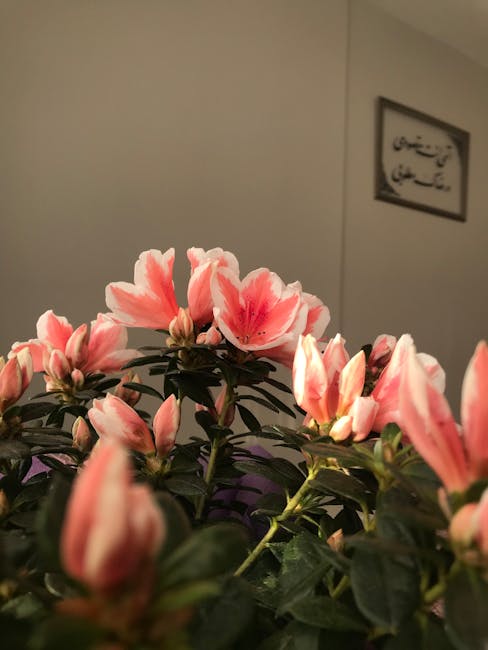
Azaleas occupy the ecological and temporal niche between early spring ephemerals and the summer meadow flowers—a bridge that keeps China's flower tourism economy active through April's final weeks and into May. Unlike the tree-form rhododendrons, azaleas are shrubs that dominate hillside thickets and forest edges, creating different photographic opportunities and requiring different access strategies.
Chongqing's azalea concentrations have received significant tourism investment in 2026, with the Qijiang Soil and Water Conservation Demonstration Park and Ta'an Town's Guanba Rose Garden (which features substantial azalea plantings alongside its namesake flowers) now promoted as combined destinations. The azalea bloom here typically peaks in late April, extending the district's flower tourism calendar beyond the rapeseed festival. The climbing roses that follow in May create a continuous bloom sequence that has made Chongqing's peripheral districts increasingly attractive for multi-day spring itineraries.
The true azalea strongholds, however, remain in the Nanling Mountains of northern Guangdong and southern Hunan, and in the Wuyi Mountains of Fujian and Jiangxi. These subtropical massifs host azalea species that bloom in response to temperature thresholds rather than photoperiod, meaning that elevation becomes the primary determinant of bloom timing. In the Nanling National Forest Park, the 1,900-meter summit of Shikengkong maintains azalea color through late May, while the 800-meter foothill zones have finished by mid-April. This vertical distribution creates a remarkably extended viewing season for visitors willing to adjust their hiking routes to current conditions.
The Wuyi Mountains offer perhaps the most integrated azalea experience, with the UNESCO World Heritage site's tea culture and Danxia landforms providing context beyond pure flower viewing. The azalea thickets here—particularly along the Nine-Bend River gorge and the Da Wang Peak trail—intermingle with ancient tea terraces and temple complexes. April represents the overlap month when both the lower-elevation early azaleas and the first upper-elevation blooms are simultaneously visible, though serious azalea enthusiasts should plan for early May to catch the higher forests at peak.
Access Strategies: Trailheads, Transfers, and the Self-Drive Advantage
China's flower tourism infrastructure has matured significantly, but the best wildflower sites still require deliberate planning. The choice between public transport and self-drive fundamentally shapes what's possible in a single April trip.
Wuyuan exemplifies the hybrid approach that works best. High-speed rail connects the county to Shanghai, Hangzhou, and Huangshan North in under three hours, but the dispersed terrace sites demand local transport. The Huangling cable car operates from a dedicated parking area with limited bus connections; without a car or chartered driver, you're dependent on infrequent rural buses that don't align with sunrise photography windows. Jiangling is more accessible via Wuyuan's main bus station, but the famous circular terrace viewpoint requires a 45-minute uphill walk from the nearest road. For photographers, the math is simple: a self-drive or chartered vehicle adds roughly 400-600 RMB daily but multiplies accessible viewpoints by a factor of five.
Luoping presents a different calculation. The county has no high-speed rail connection; the nearest station is in Qujing, 90 minutes away by bus or private car. Within Luoping, the main rapeseed zones around Jinji Peak and the Duoyi River are served by tourist shuttles during peak season, but these operate on fixed schedules that miss the golden hours. The self-drive advantage here is overwhelming: the 200,000+ mu of rapeseed fields spread across multiple townships, and the most photographed locations—particularly the sunrise viewpoint at Dawashi Village and the buffalo-herding scenes along the Jiulong River—require pre-dawn departures that no public transport accommodates.
The rhododendron zones present the most complex access challenges. Hailuogou has excellent bus connections from Chengdu (four hours) and Kangding (two hours), and the park's internal transport system is comprehensive. But the independent hiker seeking the ancient rhododendron forests above Camp 3 needs to arrange mule transport in advance—something only possible with Mandarin phone skills or a local guide. The Dulong River valley requires a permit obtained in Gongshan, and the road beyond the checkpoint is officially restricted to organized groups, though individual travelers with proper documentation increasingly report success. This is expedition travel, not casual tourism, and the preparation timeline should be measured in weeks, not days.
Fanjing Mountain has simplified access with the new Tongren high-speed rail station and direct shuttle buses to the park entrance, but the cable car to the summit books solid during April weekends. The 8,000-step traditional route remains unrestricted and uncrowded—approximately four hours of steep climbing that filters out casual visitors. For rhododendron photography specifically, the upper cable car station to the Red Clouds Golden Summit trail passes through the densest azalea and rhododendron thickets; walkers on the lower route see different, less spectacular vegetation.
Photography Ethics: Capturing Without Compromising
The pressure that flower tourism places on fragile ecosystems has become impossible to ignore. China's most photographed rapeseed terraces in Wuyuan have suffered visible soil compaction and plant damage at popular viewpoints, and the rhododendron forests of Yunnan have seen illegal cutting of flowering branches for the horticultural trade. Responsible photography in 2026 requires both technical adaptation and ethical discipline.
The rapeseed damage is the most visible and most easily prevented. The terraced fields of Huangling and Jiangling are active agricultural systems, not ornamental plantings. Walking into the fields for "immersion" shots crushes plants and compacts the soil that farmers will need for the subsequent rice crop. The designated photography platforms at Huangling—built at significant expense in 2024—provide equivalent or superior compositions without the damage. At Luoping, the buffalo-herding scenes that have become iconic are now managed through local cooperatives that rotate animals and limit daily photography sessions; participating in these organized shoots, rather than attempting to stage independent encounters, supports the community economy and prevents harassment of working animals.
Rhododendron forest photography presents different challenges. The ancient specimens at Hailuogou and in the Dulong valley have extremely shallow root systems vulnerable to foot traffic. Staying on established trails is not merely a guideline but an ecological necessity—off-trail movement in these forests can kill mature trees through root damage that manifests years later. The temptation to move branches for "better" framing should be resisted absolutely; rhododendron wood is brittle, and the broken stubs created by careless positioning become entry points for fungal infection.
The altitude factor that creates China's spectacular April blooms also creates rapidly changing weather that challenges equipment. Morning temperatures at 3,000 meters can drop below freezing even when afternoon readings reach 15°C, producing condensation cycles that fog lenses and drain batteries. The rhododendron forests are consistently humid, and the ultraviolet intensity at elevation degrades image quality without proper filtration. Photographers working these environments need weather sealing, spare batteries stored in interior pockets, and polarizing filters to manage the glare that bounces off rhododendron leaves.
Perhaps the most important technical consideration is timing within the bloom progression. Rapeseed flowers are fully open for approximately 14 days at any given elevation; rhododendron individual blooms last roughly 10 days, though a forest with mixed species can maintain color for a month. The "peak" that travel platforms promote is often slightly past optimal—flowers beginning to shed petals create cleaner compositions and more saturated color than the overcrowded full-bloom stage. For Wuyuan specifically, the April 5-12 window typically offers better photography than the March 25-April 5 period that sees maximum tourist density, even if the absolute flower count is slightly reduced.
China's April wildflower season represents a convergence of agricultural tradition, ecological diversity, and developing tourism infrastructure that has no direct parallel elsewhere. The rapeseed terraces that have defined spring travel for a decade are now complemented by increasingly accessible rhododendron forests and azalea thickets that extend the season's appeal. The travelers who benefit most are those who understand the altitude-driven bloom calendar, who invest in the transport flexibility that remote trailheads demand, and who photograph with the restraint that these landscapes require for their survival.
You Might Also Like