The China Traveler's Guide to April 2026 Strawberry Picking and Agri-Tourism: Farm Stays From Dandong to Dali
April 2026 brings peak strawberry season across China's farm stay belt, from Dandong's coastal greenhouses to Dali's Himalayan foothills.
The Strawberry Belt Runs Longer Than You Think
April in China delivers something most travelers overlook: peak strawberry season stretching across 3,000 kilometers of farmland, from the Korean border to the Himalayan foothills. The fruit ripens in waves, following the northward advance of spring, and the farm stays built around this harvest have quietly evolved into some of the most accessible rural tourism experiences for foreign visitors.
We spent the 2025 season testing routes, negotiating with hosts, and getting stuck in mud that swallowed our rental car's deposit. The infrastructure for international agri-tourism has transformed dramatically. What existed as fragmented, Mandarin-only operations five years ago now includes booking platforms with English interfaces, hosts who've hosted enough foreigners to anticipate the questions, and transportation networks that make car-free rural travel genuinely viable.
Understanding the Harvest Calendar
Strawberry season in China doesn't follow a single national schedule. The fruit ripens according to latitude, elevation, and greenhouse investment, creating distinct windows that savvy travelers can chain together into multi-region itineraries.
Dandong and the Liaodong Peninsula hit peak harvest from late March through mid-May. The region's coastal greenhouses, heated by the warm currents of the Yellow Sea, produce the Donggang 99 variety—large, conical berries with dense flesh that ships poorly but tastes extraordinary when eaten within hours of picking. Local growers have perfected a forcing technique that advances ripening by three weeks compared to open-field cultivation. By early April, the plastic tunnels along the Yalu River valley run heavy with fruit, and the harvest continues until daytime temperatures consistently exceed 28°C, usually around May 15.
The Yangtze Delta—particularly the Changxing County strawberry belt south of Shanghai—peaks slightly later, from early April through late May. This region specializes in Zhangji and Ningyu varieties, developed at the Jiangsu Academy of Agricultural Sciences for high sugar content and disease resistance. The delta's humidity creates challenges (gray mold spreads fast in poorly ventilated greenhouses), but the reward is fruit with brix measurements regularly exceeding 12%, noticeably sweeter than supermarket imports.
Dali and the Yunnan Plateau offer the latest and longest window, from mid-April through June, with some high-elevation farms extending into July. The 2,000-meter altitude slows maturation, concentrating flavors, while intense UV light at this elevation deepens color saturation. Local growers cultivate both introduced varieties (Benihoppe from Japan performs exceptionally well) and newer Chinese cultivars like Jingzang 20, bred specifically for plateau conditions. The diurnal temperature swing—warm days, near-freezing nights—creates the same stress-response that makes Yunnan coffee and wine distinctive.
Booking Farm Stays That Actually Welcome Foreigners
The platform landscape shifted decisively in 2023-2024. Several services now explicitly filter for hosts experienced with international guests, and the verification processes have tightened considerably.
Trip.com's Rural Stays section added English-language farm stay bookings in late 2024, with a filter for "international guest experience" that indicates hosts who've completed a provincial tourism bureau training program. The inventory remains concentrated in Zhejiang, Jiangsu, and Yunnan—Liaoning coverage is thinner—but the booking flow handles passport numbers, foreign payment cards, and automated confirmation messages in English. We booked four stays through the platform in 2025; three included hosts who sent pre-arrival WeChat messages with GPS coordinates and photo guides to the final kilometer of unmarked road.
Fliggy (Alipay's travel platform) offers deeper inventory in second-tier agricultural regions, including the strawberry belts around Dandong and Dalian, but requires more navigation. The "agritourism" tag filters effectively, and hosts with the "钻石房东" (diamond host) badge have typically hosted 50+ guest parties with maintained ratings above 4.8. The critical adaptation: Fliggy's customer service chat handles English inquiries surprisingly well, and they'll intervene directly with hosts who haven't previously registered foreign guests.
Direct booking through regional cooperatives remains essential for certain experiences. The Changxing Strawberry Association operates a bilingual booking desk reachable through their WeChat official account (ID: CXStrawberry2023). They represent 34 member farms, of which 12 have completed the provincial "foreign guest ready" certification including fire safety inspections, English emergency contact protocols, and at least one staff member with basic English capability. These farms cost 15-20% more than unaffiliated alternatives, but the coordination includes guaranteed picking slots during peak weekends and pre-arranged transportation from the high-speed rail station.
Dali presents a special case. The region's farm stay ecosystem developed through organic agriculture networks rather than strawberry specialization, but several operations have integrated u-pick operations as secondary revenue. The Dali Agri-Tourism Alliance maintains a spreadsheet—updated weekly during season—of member farms with current crop status, language capabilities, and accessibility notes. Access requires email inquiry ([email protected]), but response times averaged under 24 hours during our April 2025 test.
Getting There Without a Car
Rural China's transportation infrastructure has improved faster than rental car accessibility for foreign license holders. The combination of high-speed rail, regional bus networks, and host-arranged pickup services now enables genuinely car-free agri-tourism.
Dandong sits on the Beijing-Shenyang-Dandong high-speed line, with four daily services from Beijing taking just over four hours. The complication: strawberry farms cluster 30-50 kilometers east of the city, in the river valley toward the Korean border. The regional solution emerged in 2022: coordinated pickup services operated by farm stay hosts themselves. When booking through Trip.com's verified listings, hosts now include pickup timing from Dandong Railway Station's east plaza as a standard option (¥80-120 depending on distance, payable on arrival). The alternative—Dandong's rural bus network—requires patience. Services to Donggang city (the strawberry hub) depart hourly from the long-distance bus station, but the final 8-15 kilometers to specific farms typically requires negotiation with motorcycle taxi drivers at the Donggang terminal. Carry the farm's name in Chinese characters; even this fails occasionally, and we've walked the final kilometer more than once.
The Changxing strawberry belt benefits from exceptional rail connectivity. The Xuancheng-Hangzhou high-speed line serves Changxing Railway Station, with 40+ daily services from Shanghai Hongqiao (50 minutes) and Hangzhou East (25 minutes). The innovation here: a seasonal shuttle network launched in 2024 specifically for agri-tourists. From April 1 through May 31, electric minibuses depart Changxing Station every 90 minutes for a loop serving twelve major strawberry farms and associated farm stays. The ¥15 day pass, purchasable through Alipay at the station tourist desk, allows unlimited rides. Frequency drops to every three hours on weekdays, so timing matters—missing the 10:30 departure means waiting until 13:00.
Dali's complexity lies in elevation change and road quality. The new Dali-Lijiang high-speed extension, opened December 2024, includes a station at Xianghe specifically serving the eastern agricultural plateau. Strawberry farms in the Dali-Eryuan corridor now fall within 40 minutes of rail service, a dramatic improvement from the previous three-hour bus journey from Dali Old Town. Hosts in this region have standardized pickup from Xianghe Station (included in most farm stay packages above ¥400/night), and several now offer electric vehicle transfers—a meaningful upgrade on the diesel minivans that previously dominated.
For farms beyond rail corridors, the DiDi ride-hailing app has expanded rural coverage substantially. In 2025, we successfully hailed rides to farms 25 kilometers from county towns in both Liaoning and Zhejiang, though return journeys required pre-arrangement. The practical solution: negotiate with your outbound driver for a return pickup, paid in cash or through WeChat transfer. Most rural drivers prefer this to empty backhauls, and rates typically run 30% below urban pricing.
What to Expect, What to Bring
Farm stays in China's strawberry regions operate on different assumptions than European or North American agritourism. The experiences can be extraordinary, but the mismatch between expectations and reality generates most negative reviews.
Accommodation standards vary enormously. At the verified tier (Trip.com's rural stays, Fliggy diamond hosts), rooms typically include private bathrooms, reliable WiFi, and heating or cooling appropriate to season. Below this tier, shared facilities remain common, and "hot water available" may mean a solar shower system that performs poorly on overcast days. The ¥200-350/night price band in Changxing and Dali generally delivers acceptable comfort; below ¥150, temper expectations accordingly.
Meal inclusion is standard but inflexible. Most farm stays include dinner and breakfast in the nightly rate, with menus determined by what's available rather than guest preference. The strawberry connection manifests unpredictably—expect strawberry rice wine, strawberry vinegar dressings, and occasionally strawberry-leaf tempura, but don't assume fresh berries at every meal. Hosts sell their premium fruit; the damaged or undersized specimens become kitchen ingredients.
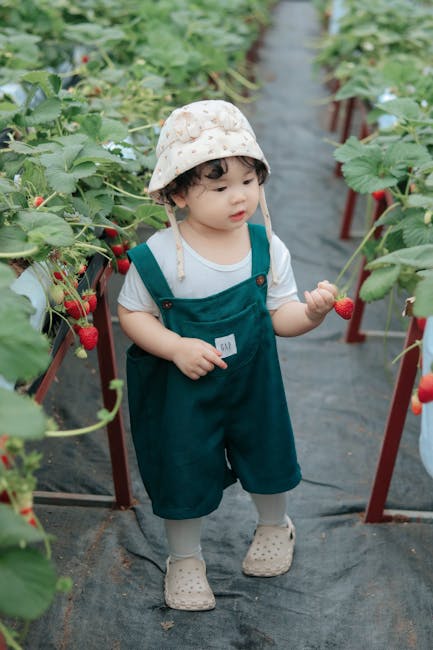
Picking protocols require attention. Chinese u-pick operations typically charge by weight rather than time, with minimum purchase requirements (usually 500g-1kg). The plastic baskets provided hold 2-3kg; filling them completely triggers premium pricing tiers that surprise unprepared visitors. Sample berries while picking—this is expected and welcomed—but systematic eating without purchasing generates visible hostility. The unspoken rule: taste three to five berries for quality assessment, then harvest systematically.
Pack for agricultural conditions. Greenhouse temperatures in April run 8-12°C above ambient, creating sauna conditions by midday. Layered clothing matters: you'll want a jacket for morning transport, short sleeves for 10:00-14:00 picking, and rain protection (plastic tunnels leak). Footwear is critical—the ground between greenhouse rows remains muddy through April in most regions, and hosts' loaner rubber boots rarely fit foreign feet. Bring boots you don't mind staining with iron-rich soil.
The Hosts Who Make It Work
The most reliable indicator of experience quality isn't platform ratings but host biography. The strawberry farm stays that succeed with international guests are typically second-generation operations, where adult children have returned to manage digital presence and guest relations while parents handle cultivation.
In Dandong's Wulongbei district, we stayed with the Liu family, whose daughter Lily completed hospitality training in Dalian before returning in 2022. She maintains the Trip.com listing, handles English correspondence, and has developed a three-day itinerary that pairs strawberry picking with Yalu River border-zone hiking—an experience unavailable through standard channels. Her parents, who began greenhouse cultivation in 1998, remain skeptical of foreign food preferences but have learned to prepare cucumber salads without the fermented shrimp paste that dominates local cuisine.
Near Changxing, the Zhou family's operation demonstrates how certification programs change behavior. Their "foreign guest ready" status required installing smoke detectors, posting emergency numbers in English, and completing 20 hours of cultural sensitivity training. Mr. Zhou, initially dismissive, now maintains a guestbook with entries from seventeen countries and can explain the difference between European and American strawberry preferences without prompting.
These hosts represent the emerging standard. The infrastructure for international agri-tourism in China hasn't finished construction, but the foundation—rail links, platform investment, host training—is now solid enough to support genuine exploration. April 2026 offers the first full season where the entire strawberry belt, from Korean border to Himalayan foothills, operates on predictable, bookable terms for travelers without Mandarin fluency or local contacts.
You Might Also Like