China's High-Speed Rail Sleeper Revival: Why Overnight Trains Are Winning Over Red-Eye Flights
China's revived high-speed sleeper trains are transforming overnight travel between major cities, offering genuine alternatives to red-eye flights.
The Return of the Night Train
Something unexpected is happening on China's busiest travel corridors. After years of decline, overnight rail travel is staging a dramatic comeback—and it's not the cramped, smoke-filled experience older travelers might remember. The new generation of high-speed sleeper services, launched in earnest through 2024-2025 and expanding through 2026, has transformed what it means to travel between China's megacities while you sleep.
The revival centers on three strategic corridors that together carry over 40% of China's intercity passenger volume. The Beijing-Shanghai axis, long dominated by daytime G-trains and budget flights, now hosts revived D-series overnight services that complete the 1,318-kilometer journey in roughly 12 hours. The Chengdu-Beijing corridor—1,874 kilometers across mountain ranges and the Qinling divide—has proven surprisingly viable for sleeper operations, with new CR400AF sleeper sets cutting previous journey times by nearly three hours. Most ambitiously, the Guangzhou-Beijing corridor at 2,298 kilometers represents the longest high-speed sleeper service currently operating globally, a testament to how far China's rail technology has evolved.
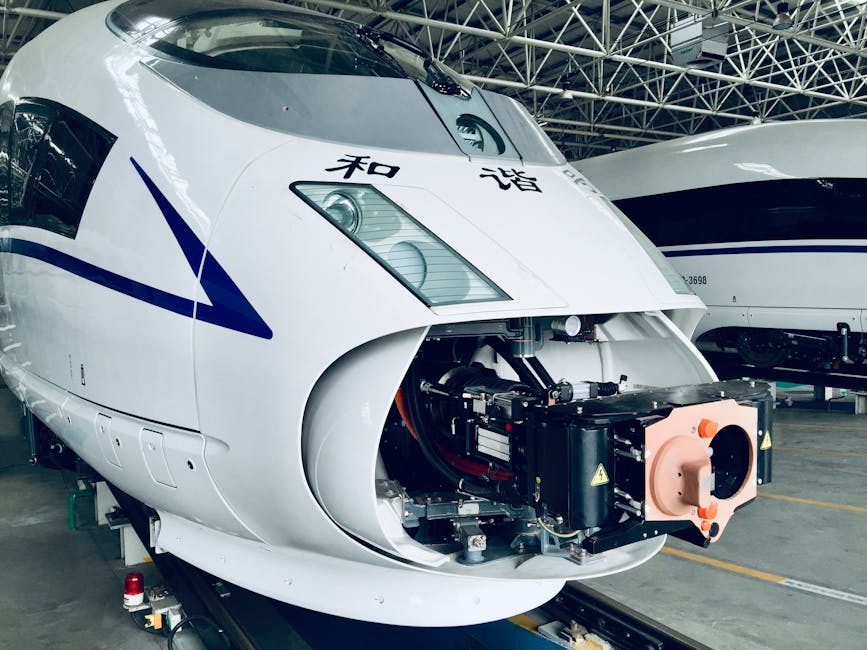
These aren't the lumbering K-trains of decades past. The CR400AF sleeper variants, introduced in limited service during 2023 and entering wider deployment through 2025, maintain operational speeds of 250 km/h even on upgraded legacy lines, with design peaks of 350 km/h where infrastructure permits. What this means practically: you board in Beijing around 9 PM, sleep through the night in a private or semi-private berth, and arrive in Shanghai's Hongqiao station by 8:30 AM—showered, breakfasted, and ready for your meeting.
Inside the New Sleeper Experience
The hardware matters enormously here, and China Railway has invested heavily in differentiating its overnight product. The CR400AF sleeper configuration offers three distinct accommodation tiers, each targeting different traveler profiles and budgets.
At the premium end, private deluxe soft sleepers provide enclosed two-berth compartments with individual climate control, USB-C and 220V power outlets, reading lights with adjustable color temperature, and surprisingly effective noise dampening. These compartments, roughly 4.2 square meters, include a small washbasin and mirror—functional rather than luxurious, but a genuine improvement over previous generations. CRRC's design specifications emphasize acoustic isolation, with compartment doors achieving 35dB reduction and corridor noise kept below 55dB during normal operation.
The standard soft sleeper tier uses a four-berth configuration that will feel familiar to anyone who's traveled on Chinese overnight trains, but with critical upgrades. Bunks are 10 centimeters wider than previous generations (1980mm × 750mm), with memory-foam mattresses replacing the thin padding that made older sleepers notorious. Each berth has its own reading light, two USB charging ports, and a small stowage net. The compartment door locks securely, and female travelers can request women-only compartments through the 12306 booking system—a feature introduced in 2024 following passenger feedback.
The genuine innovation, and the tier generating most discussion among budget travelers, is the new "capsule" or hard sleeper configuration. Rather than traditional open six-berth bays, these use a staggered pod design with partial height divisions, creating something closer to Japanese capsule hotels than classic Chinese train accommodation. Each pod has its own curtain, individual ventilation outlet, and fold-down work surface. At roughly 60% the cost of soft sleeper berths, these have become popular with younger travelers and remote workers who need to arrive functional rather than rested.
All tiers share access to redesigned communal facilities. The CR400AF sleeper sets include two shower rooms per carriage in soft sleeper configurations—timed hot water, basic toiletries provided, genuinely usable rather than the theoretical facilities on older trains. Dining cars operate on a pre-order system through the 12306 app, with breakfast included in deluxe soft sleeper fares and available for purchase otherwise. The food won't win culinary awards, but the congee and youtiao option at 6:30 AM beats most airport breakfast offerings.
The Booking Game: Strategies for Securing Your Berth
Here's where China's rail system still frustrates even experienced travelers. The 12306 platform, while vastly improved from its notorious 2011 launch, remains idiosyncratic in how it releases sleeper inventory—and understanding these patterns can mean the difference between a private compartment and a middle bunk in a noisy bay.
For the 2026 route network, tickets release 15 days before departure at 8:00 AM Beijing time. This applies universally across all corridors, but demand patterns vary enormously. Beijing-Shanghai sleepers, particularly on Sunday and Thursday nights, sell out within minutes of release. The Chengdu-Beijing service, serving a more dispersed market, typically maintains availability for 24-48 hours. Guangzhou-Beijing, despite its length, has proven less competitive than anticipated—perhaps because the 12-hour flight alternative, while exhausting, remains price-competitive for leisure travelers.
The 12306 app now offers a "berth preference" function that, while not guaranteeing specific assignments, substantially improves your odds. For soft sleepers, selecting "lower berth preferred" costs no premium and typically delivers—upper berths, while cheaper by roughly 15%, remain less popular for obvious comfort reasons. The more powerful tool is the "private compartment lock" option, available when booking two or four berths simultaneously. For business travelers with flexible expense policies, booking all four berths in a soft sleeper compartment (at roughly ¥1,800-2,200 total for Beijing-Shanghai) delivers genuine privacy at roughly 40% the cost of equivalent flight plus hotel arrangements.
Foreign travelers face persistent friction. The 12306 English interface lacks several advanced functions, including the women-only compartment request and specific berth locking. The passport verification process, while streamlined from previous years, still requires in-person activation at major stations before online booking becomes possible. Third-party platforms like Trip.com offer workarounds but charge 10-15% premiums and occasionally fail to deliver promised berth assignments.
A practical strategy emerging among frequent travelers: book immediately at release, then monitor for upgrades. China Railway's cancellation policy allows full refunds until 8 days before departure, partial refunds thereafter. This creates a secondary market of sorts, with desirable berths—particularly lower bunks and compartment-end positions with extra luggage space—reappearing sporadically in the final week before travel.
When Rail Sleepers Beat Flying: The Cost-Time Calculation
The economic case for overnight rail depends heavily on traveler type and trip purpose. For business travel between Beijing and Shanghai, the comparison breaks down instructively.
A typical red-eye flight—departing Beijing Capital at 10 PM, arriving Shanghai Pudong at 12:30 AM—costs ¥400-800 in economy depending on booking window, plus ¥200-350 for airport-area accommodation or ¥150 for late-night ground transport into the city. Total effective cost: ¥750-1,200, with arrival exhaustion and a disrupted sleep cycle. The morning G-train alternative—2.5 hours, ¥553-933 depending on class—requires either a 6 AM departure (meaning 4:30 AM wake) or sacrificing half a working day.
The overnight D-train sleeper, at ¥650-1,100 for soft sleeper depending on berth position, occupies a compelling middle ground. You sacrifice no productive hours, sleep reasonably well, and arrive directly at Hongqiao—connected to Shanghai's metro and 20 minutes from most business districts. For travelers whose time has literal value, the calculation increasingly favors rail.
The Chengdu-Beijing corridor demonstrates rail's advantage more dramatically. Flight time is only 3 hours, but Chengdu Shuangliu and Beijing Capital airports sit distant from city centers, with security procedures and typical delays extending door-to-door time to 6-7 hours. The overnight D-train, at 10.5 hours scheduled and typically arriving within 15 minutes of timetable, costs ¥720-1,280 versus ¥800-1,600 for equivalent flight timing—while delivering superior rest quality for most passengers.
Leisure travelers face different calculations. Families with children often prefer rail's freedom of movement and absence of strict baggage limits. The Guangzhou-Beijing sleeper, despite its length, has developed a following among rail enthusiasts and travelers specifically seeking the experience—much as the Trans-Siberian attracts passengers who value journey over destination. At ¥1,100-1,850 for soft sleeper versus ¥900-1,400 for discount flights, the price premium is modest for a genuine travel experience.
The environmental calculation, increasingly relevant for corporate travel policies, favors rail substantially. Per-passenger carbon emissions for Beijing-Shanghai high-speed rail are approximately 15% of equivalent flight emissions, with the gap widening on longer corridors where aircraft fuel consumption increases disproportionately.
The Future of Overnight Rail in China
China Railway's 2026 planning documents suggest this revival is strategic rather than experimental. Additional CR400AF sleeper sets are on order, with production capacity at CRRC Qingdao Sifang expanded specifically for this variant. Route planning indicates potential extension to Kunming-Beijing and Xi'an-Shanghai corridors, leveraging the substantial high-speed rail infrastructure built during the 2010s but underutilized for overnight services.
Competition with aviation is intensifying in productive ways. China Eastern and Air China have both introduced improved business-class red-eye products on Beijing-Shanghai, with lie-flat seats and improved meal service—implicit acknowledgment that rail sleepers have raised baseline expectations. The market appears to be segmenting: price-sensitive leisure travelers and time-sensitive business travelers increasingly choose rail, while same-day business travel and long-haul connections remain aviation's domain.
For travelers, the practical implication is clear. China's overnight rail network, after years of neglect, now offers a genuine alternative to the misery of red-eye flights and early-morning airport dashes. The booking process rewards preparation and persistence. The onboard experience, while not luxurious by international standards, delivers functional rest and productive arrival. And the economics, particularly for business travel where time and condition on arrival matter, increasingly favor steel wheels over jet engines.
The night train, it turns out, had not disappeared—it was merely waiting for the right technology and the right corridors to make its case again.
You Might Also Like