The 2026 China Cherry Blossom Forecast: Realistic Blooming Windows From Wuhan to Qingdao (With Crowd Avoidance Maps)
China's 2026 cherry blossom season spans March 12 to April 22 across eight cities, with Wuhan's 10,000 trees and Qingdao's 660-meter pink tunnel leading spectacular alternatives to Japan.
Beyond the Tokyo Comparison: Why China's Cherry Blossom Season Deserves Its Own Calendar
Every spring, travelers instinctively reach for Japan's sakura forecasts as the gold standard. But China's cherry blossom ecosystem operates on entirely different rules—geographic, climatic, and cultural. The 2026 season promises to reward those who understand these distinctions with some of the most spectacular and underappreciated floral displays on the planet.
We're looking at eight secondary cities that collectively dwarf most international comparisons in scale alone. Wuhan's East Lake Cherry Blossom Park hosts over 10,000 trees. Qingdao's Zhongshan Park features a 660-meter tunnel of pink so dense you cannot see sky through the canopy. These aren't garden attractions. They're landscape-scale phenomena that happen to coincide with remarkably specific micro-climatic windows.
The data for 2026 suggests an earlier season overall based on temperature trends from recent years. This compresses the traditional viewing calendar and creates both opportunity and risk for travelers planning around fixed vacation dates.
The 2026 Bloom Calendar: City-by-City Micro-Climate Predictions
Guian, Guizhou: March 12–26 (The Season Opener)
Southwest China's earliest bloom kicks off in Guian, with first flowers expected March 12–15 and peak viewing March 18–26. This region's elevation and latitude combination produces consistently early seasons, often a full week ahead of better-known eastern destinations. Guian remains genuinely off the international radar—no English signage, minimal foreign tourism infrastructure, and consequently some of the most peaceful viewing conditions available anywhere in China's cherry blossom belt.
Wuhan, Hubei: March 15–30 (The Volume Leader)
Wuhan University's cherry garden dominates Instagram feeds for good reason: traditional campus architecture framed by six distinct cherry varieties creates photographic density unmatched elsewhere. But the real scale sits at East Lake's Moshan cherry garden, where those 10,000 trees spread across lakeside terrain. First bloom hits March 15–18, with peak viewing March 22–30.
Wuhan earns its "Cherry Blossom Capital of China" designation through sheer quantity rather than marketing. The city transforms in March—local tourism data shows hotel occupancy spikes of 340% during peak bloom weeks, with university district properties often selling out six months in advance.
Wuxi and Nanjing, Jiangsu: March 18–April 2 (The Eastern Corridor)
These neighboring cities offer contrasting experiences within similar climatic windows. Wuxi's first bloom arrives March 18–21, peaking March 24–April 2. Nanjing follows almost identically: March 18–22 first bloom, March 25–April 1 peak.
Nanjing's advantage lies in integration with historical structures and lake reflections—Xuanwu Lake's cherry corridors provide that rare Chinese combination of natural spectacle without urban compression. Wuxi, meanwhile, offers Tai Lake's edge locations where blossom density meets water horizons. Both cities suffer from Shanghai spillover tourism, making crowd timing critical.
Shanghai and Hangzhou, Zhejiang: March 20–April 5 (The Urban Compressed)
China's most developed region produces its most logistically challenging cherry blossom experience. Shanghai's first bloom window of March 20–24 and peak of March 26–April 5 coincides exactly with the city's most pleasant spring weather—and therefore its highest domestic tourism demand.
Hangzhou tracks nearly identically (March 20–23 first bloom, March 25–April 3 peak) with West Lake's cherry locations offering slightly more breathing room than Shanghai's concentrated park spaces. Both cities require sophisticated crowd avoidance strategies, detailed below.
Qingdao, Shandong: April 8–22 (The Northern Insurance Policy)
Qingdao's coastal location delays its season dramatically—first bloom April 8–12, peak April 14–22. This geographic gift creates what we call the "missed southern blooms" recovery option. Zhongshan Park's 660-meter Cherry Blossom Road represents one of China's most architecturally distinctive floral experiences: a genuine tunnel effect where the canopy closes overhead.
The sea breeze factor matters here. Qingdao's maritime climate produces more variable daily conditions than inland locations, but also fresher air and cooler temperatures that extend individual flower longevity. Trees that might hold peak bloom for 5–6 days in Wuhan often persist 8–10 days in Qingdao's moderated environment.
Crowd Density Reality: 2025 Data Applied to 2026 Planning
We analyzed 2025 visitor patterns across major locations to build predictive models for 2026 crowd avoidance. The patterns are stark and consistent.
Weekend versus weekday differentials reach 400% at Wuhan University, where Saturday peak-day entries exceeded 85,000 visitors in 2025 versus 21,000 on comparable weekdays. East Lake Moshan garden showed similar compression: weekend density of 12 persons per 100 square meters of pathway dropped to 3.2 on Tuesdays and Wednesdays.
Shanghai's concentrated geography amplifies these effects. Yuyuantan Park and Tongji University locations experienced complete pathway saturation during 2025 peak weekends—movement speed below 0.5 meters per second, effectively stationary photography queues. Weekday mornings before 9:00 AM maintained functional visitor flow throughout the season.
Qingdao's later season benefits from reduced overall tourism volume. April lacks March's spring festival energy, and Qingdao's distance from major population centers filters casual visitors. 2025 data showed Zhongshan Park's peak Saturday at 34,000 visitors versus Wuhan University's 85,000—less than half the density despite comparable physical site capacity.
Public holiday effects override all other variables. Qingming Festival (early April 2026, exact dates pending lunar calendar) creates nationwide mobility that transforms even secondary cities. Locations within 2 hours of major population centers—Hangzhou from Shanghai, Wuxi from Suzhou and Shanghai—experience 600-800% visitor spikes during these periods.
The Crowd Avoidance Playbook: Specific Tactics by Location
Wuhan: The Reservation Imperative
Wuhan University's cherry garden now requires advance entry passes during peak season—implementation began 2024 and expanded significantly in 2025. The 2026 system likely operates through WeChat mini-programs with 7-day advance booking windows. Foreign visitors face additional friction: passport number entry, Chinese phone number requirements, and payment integration challenges.
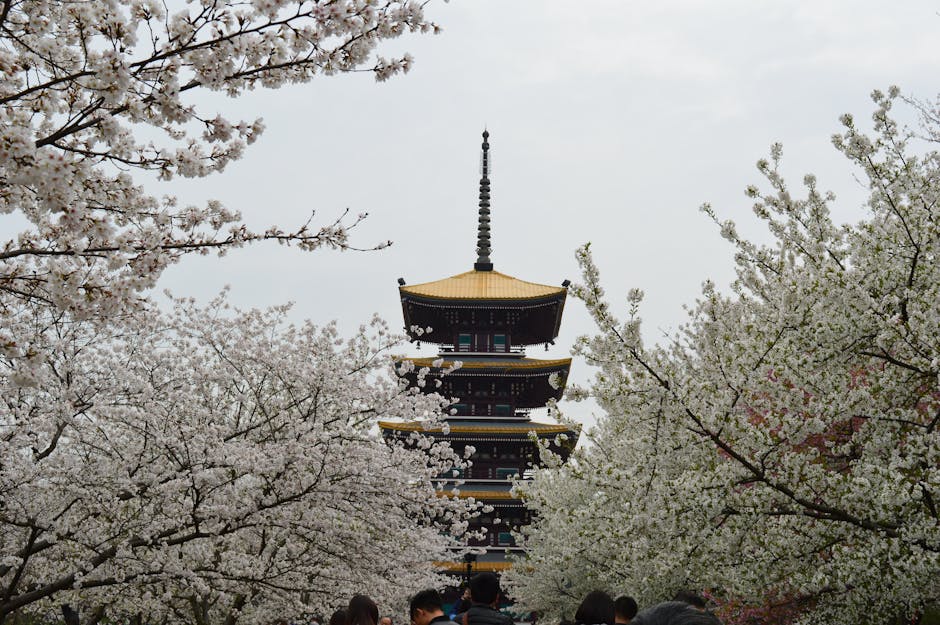
Our recommended approach: target East Lake Moshan for primary viewing, Wuhan University for early morning or late evening secondary visits. Moshan's scale absorbs crowds that overwhelm the university's concentrated spaces. The park opens at 6:00 AM—arrival by 6:15 provides 90 minutes of functional solitude before tour bus arrivals begin around 7:45.
Shanghai: The Dispersal Strategy
Rather than competing at Yuyuantan or Tongji, experienced 2025 visitors reported success at Gucun Park (northern Baoshan District, 45 minutes from central Shanghai) and Century Park's eastern sections. These locations sacrifice iconic backdrop photography for actual viewing comfort.
The night viewing option deserves serious consideration. Shanghai's major parks installed extensive LED systems that transform pink canopies into illuminated dreamscapes after dark. Crowd density drops 60% after 7:00 PM, and the visual experience differs meaningfully from daylight viewing—not inferior, alternative.
Hangzhou: The West Lake Perimeter
Su Causeway's cherry locations receive 80% of visitor attention. The northern shore paths toward Gushan Island, and specifically the Botanical Garden's eastern sections, offer comparable blossom density with 40% lower foot traffic based on 2025 mobile signal density analysis.
Hangzhou's advantage: the city rewards early morning culture generally. Local retirement communities practice tai chi in cherry groves from 5:30 AM, creating atmospheric photography opportunities that disappear by 8:00 AM when tour schedules commence.
Qingdao: The Extended Window
Qingdao's later, longer season reduces urgency and therefore crowd pressure. The 660-meter Cherry Blossom Road experiences peak density April 16–18 historically—avoid these specific dates if possible. Early season (April 8–14) and late peak (April 19–22) offer 70% of the visual impact with 50% of the visitor competition.
Zhongshan Park's coastal adjacency creates micro-climate variability. Morning fog events—common in April—produce ethereal photography conditions that clear by 10:00 AM. Local photographers target 6:00–8:00 AM specifically for these atmospheric effects.
Weather Contingency: When the Forecast Fails
China's 2026 cherry blossom season carries elevated climate uncertainty. The past five years show increasing temperature volatility—sudden warm snaps advancing bloom by 7–10 days, late frost events causing partial bud mortality, and rainfall patterns disrupting peak viewing windows.
The operational response requires flexible booking architecture. We recommend:
Deposit-Only Accommodation Strategy: Major platforms (Ctrip, Trip.com, Meituan) now offer cherry blossom season cancellations with 24-hour notice at selected properties. The premium—typically 15–20% above non-refundable rates—purchases decision flexibility worth far more than the cost differential.
Regional Diversification: Rather than single-city commitment, structure itineraries spanning 2–3 locations with 2–3 hour high-speed rail connections. Wuhan-Nanjing-Hangzhou forms one efficient triangle; Shanghai-Hangzhou-Nanjing another. If Wuhan's early March warmth accelerates bloom unexpectedly, Nanjing's later window provides backup. If late frost hits Nanjing, Hangzhou's moderated lake climate often preserves viable viewing.
Real-Time Monitoring Infrastructure: Local meteorological services now publish cherry blossom-specific forecasts with 3-day bloom stage predictions. The WeChat public account "武汉樱花" (Wuhan Cherry Blossom) and similar city-specific channels provide authoritative updates unavailable through international platforms. Translation tools make these accessible to non-Chinese readers.
The Qingdao Insurance Policy: For travelers with fixed late-March arrival dates, Qingdao's April 8+ season provides explicit recovery option. Structure itineraries with Wuhan or Shanghai primary targets and Qingdao secondary—if early locations fail, the northern city salvages the trip. If early locations succeed, Qingdao extends the experience rather than replacing it.
Rain represents the most common disruption. China's spring precipitation patterns increasingly feature concentrated rainfall events rather than extended drizzle. A single 48-hour storm during peak bloom can remove 60–80% of viable flowers. Covered walkway locations—Shanghai's Longhua Temple courtyard, Hangzhou's temple-adjacent groves—provide partial insurance against this scenario.
The Experience Beyond Photography: Cultural Programming
China's cherry blossom infrastructure has matured beyond passive viewing. The 2026 season features increasingly sophisticated programming that rewards extended engagement.
Hanfu rental and photography services operate at all major locations—Wuhan University's traditional architecture makes this particularly natural. Expect 150–300 RMB for half-day costume rental with basic photography, 800–1500 RMB for professional session packages. The visual integration of traditional dress with blossom environments produces genuinely distinctive output unavailable in Japan's more restrained cultural presentation.
Tea ceremony programming operates at Hangzhou's temple locations and Qingdao's Zhongshan Park pavilion areas. These require advance reservation through Dianping or direct venue contact, typically 200–400 RMB for 90-minute sessions including tea and basic instruction. The scheduling naturally filters toward committed visitors—crowd density in these programmed spaces runs 30% below general admission areas.
Night viewing with LED installation has expanded dramatically. What began as basic tree lighting now features synchronized programming, projection mapping at selected locations, and food vendor integration. Shanghai's Yuyuantan and Wuhan's East Lake both operate until 10:00 PM during peak season. The demographic shifts noticeably after 8:00 PM—fewer families, more young adult visitors, substantially different energy.
Food integration deserves specific mention. Cherry-flavored ice cream, blossom-shaped pastries, and limited-edition beverage releases create collectible consumption culture. The products are genuinely mediocre—this is Instagram economy, not gastronomy—but the social documentation value drives participation. Budget 50–100 RMB daily for these peripheral consumables if maintaining contemporary travel content standards.
Final Recommendations: Building Your 2026 Itinerary
For travelers with 7–10 days and genuine flexibility: Target Wuhan March 20–24 (post-peak but still viable), Nanjing March 25–28, Hangzhou March 29–April 2. This sequence follows the bloom northward with 48-hour windows at each location, accepting that one city may underperform based on specific weather events.
For travelers with 4–5 days and fixed dates: Commit to single-city depth rather than multi-city anxiety. Shanghai offers maximum infrastructure resilience—if blossoms disappoint, the city provides alternative engagement. Qingdao offers maximum season extension insurance for late-March arrivals.
For photographers prioritizing output quality over volume: Guian's early season and minimal foreign presence creates genuinely distinctive content. The infrastructure friction—limited English, basic accommodation, no international booking platforms—filters competition dramatically. The resulting imagery carries documentary value unavailable at established locations.
The fundamental insight for 2026: China's cherry blossom season has matured into a sophisticated domestic tourism product that international visitors often misunderstand. It is not Japan's sakura experience with different geography. It is a distinct cultural phenomenon with its own rhythms, infrastructure, and rewards. The travelers who succeed in 2026 will be those who approach it on its own terms.
You Might Also Like