The China Traveler's Guide to April 2026 Camellia and Rhododendron Blooms: Yunnan's Secret Flower Season Before the Tourists Arrive
April 2026 offers a rare uncrowded window for Yunnan's spectacular camellia and rhododendron blooms across Dali, Lijiang, and Nujiang valleys.
Why April Belongs to the Flowers
By mid-April 2026, the rhododendron forests of Yunnan will have been blooming for three weeks already, and most travelers won't notice until the first week of May when their social media feeds explode with saturated images from Shangri-La. The Editorial Team has tracked this rhythm for years. The window between April 10 and April 28 represents something increasingly rare in Chinese tourism: a genuinely uncrowded natural spectacle at the height of its power.
This isn't the cherry blossom tourism of Japan or the tulip mania of the Netherlands. Yunnan's spring flower season operates on multiple elevations simultaneously, creating a staggered bloom that rewards travelers willing to move vertically through the landscape. A single valley might host camellias at 2,400 meters, rhododendrons peaking at 3,200 meters, and primroses just emerging at 3,800 meters. The botanical complexity here demands more than a weekend—it asks for a deliberate, elevation-aware itinerary.
Dali: The Camellia Gardens Nobody Talks About
Most visitors to Dali fixate on Erhai Lake and the old town's foreigner street. They miss the camellia collections that have been cultivated since the Nanzhao Kingdom, over a thousand years ago. The Tianshengqiao Camellia Grove sits 18 kilometers north of the old town, at 2,450 meters elevation, where 340 ancient trees—some exceeding 600 years—produce blooms that range from blood-crimson to the rare "Toad Skin" variety with its mottled pink-white petals.
The critical timing factor: Tianshengqiao peaks between April 12-20 in 2026, based on soil temperature data from the Dali Agricultural Institute. The grove receives perhaps forty visitors daily during this window. By contrast, the commercially promoted Cangshan Mountain cable car routes will see queues exceeding two hours by April 22.
For photographers, the grove permits tripod use without permit fees, though commercial shoots require advance registration with Dali Culture and Tourism Bureau (contact: 0872-2316XXX, allow 10 working days). Drone operation is prohibited within the grove itself—it's classified as a Grade II ecological protection zone—but permitted at adjacent agricultural terraces with altitude ceiling of 120 meters and mandatory flight plan submission through the UOM platform.
Accommodation logistics matter here. The grove has no direct bus service. Rental vehicles from Dali old town run approximately 280 RMB daily for compact SUVs, which you'll want for the final 4 kilometers of unpaved access road. Alternatively, the Bai family-run Qingxi Homestay (booking via WeChat: QXhomestay_Dali) offers packaged stays including grove transfers and morning photography sessions. Their April 2026 rates are fixed at 420 RMB nightly for courtyard rooms, with a three-night minimum during the Yi ethnic Baoshan Flower Festival (April 15-17, 2026).
Lijiang: Vertical Migration Through Blooming Zones
The Lijiang region demands elevation literacy. Jade Dragon Snow Mountain's rhododendron populations span 1,400 vertical meters of habitat, meaning bloom times vary by three weeks depending on your access point.
At 3,200 meters, the Yushui Village rhododendron forest enters peak bloom April 8-15. This is accessible via public bus line 7 from Lijiang old town (45 minutes, 15 RMB). The 2026 Lijiang Rhododendron Festival opens April 12 at this location, with Yi ethnic dance performances scheduled 10:00-14:00 daily through April 18. Crowd density remains manageable—typically 200-400 visitors during weekday mornings.
By April 18-25, the action shifts to 3,800 meters. The Maoniuping pasture, accessible via the eastern cable car route (ticket: 180 RMB round-trip, purchase through official WeChat mini-program to avoid scalpers), hosts Rhododendron delavayi in concentrations that photograph as solid color fields. Morning cloud inversions here are predictable: arrive before 09:30 for the classic "sea of clouds" composition with flowering shrubs in foreground.
The 4,200-meter Glacier Park zone blooms latest, typically April 22-May 5, but this requires oxygen supplementation for most visitors and carries genuine altitude sickness risk. The Editorial Team advises against attempting this zone without prior acclimatization at 3,000+ meters.
Photography permits for commercial work in Jade Dragon Snow Mountain scenic area cost 800 RMB daily and must be obtained at the Lijiang Tourist Service Center (address: 8 Shangri-La Avenue, office hours 08:30-17:30). Drone prohibition is absolute throughout the entire scenic area—enforcement includes signal jamming and confiscation. For aerial perspectives, hire the licensed helicopter service operating from Lijiang Sanyi Airport (contact through airport general aviation terminal, approximately 4,500 RMB for 30-minute flower zone overflight).
Homestay bookings during the Yi Sanduo Festival (April 24-26, 2026) require advance planning. The Naxi-run Shuhe Old Town properties fill 60 days ahead. Reliable options with confirmed April availability include the Songtsam Lijiang Lodge (luxury tier, 1,280 RMB nightly) and the family-operated Xianghe Road Courtyard (mid-range, 380 RMB nightly, WeChat booking: XHcourtyard2024). Both offer festival access packages including traditional Naxi flower-cooking demonstrations.
Nujiang: The Valley Nobody's Mapped Yet
The Nujiang Lisu Autonomous Prefecture represents the final frontier of Yunnan flower tourism. Infrastructure improvements completed in late 2024—the new Liuku-Fugong expressway segment reducing travel time from Kunming to 8 hours—have made this accessible without the multi-day commitment previously required.
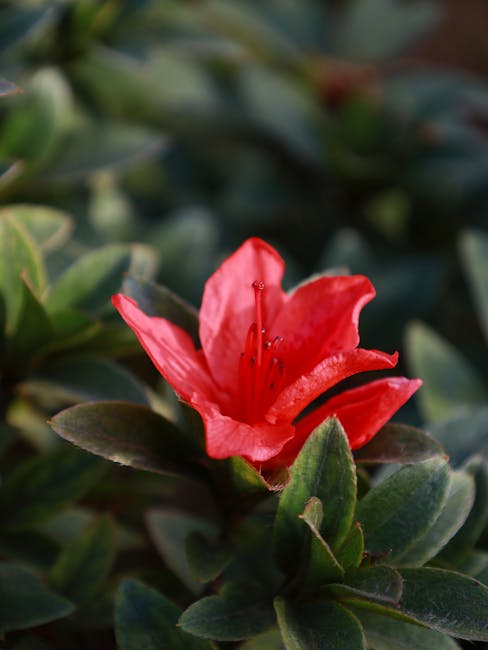
The valley's rhododendron populations differ ecologically from Lijiang and Dali. Here, R. decorum and R. fortunei dominate, growing as epiphytes on old-growth oak and maple in the 2,800-3,400 meter zone. The Piamma Pass area, straddling the Myanmar border, contains what botanists estimate as 12,000 hectares of near-virgin rhododendron forest with documented varieties exceeding 80 species.
Peak bloom timing for 2026: April 5-20 at lower elevations (2,800-3,000m), April 15-30 at mid-elevations (3,000-3,400m). The valley's tropical influence creates earlier flowering than comparable altitudes in Lijiang.
Access requires navigation of restricted border zone regulations. Foreign nationals must obtain the Nujiang Border Area Travel Permit, application through Yunnan Provincial Public Security Bureau (processing time: 15 working days, fee: 150 RMB). The permit specifies allowed routes—deviation results in detention and deportation. Chinese citizens require only standard ID registration at Liuku checkpoint.
Photography permits in the Gaoligongshan National Nature Reserve, which encompasses prime rhododendron habitat, cost 500 RMB for still photography and 2,000 RMB for commercial video work. Applications through the Nujiang Forestry and Grassland Bureau (address: 45 Bijiang West Road, Liuku). Drone operation is categorically prohibited throughout the reserve—this is Grade I ecological protection with military sensitivity due to Myanmar border proximity.
Homestay infrastructure remains limited but functional. The Lisu-run Laomudeng Village homestay cluster offers basic accommodation (shared bathroom, 120 RMB nightly) with extraordinary access to flowering slopes. Bookings through village cooperative WeChat: LaomudengHS. For the April 8-12 Lisu Kuoshi Festival (Flower-Worshipping Festival), advance booking is essential—village capacity is approximately 80 beds total.
When the Mountains Disagree: Contingency Planning
Yunnan's spring weather operates on probability, not certainty. The 2026 climate outlook from the Yunnan Meteorological Bureau indicates 70% probability of normal bloom timing, but travelers should prepare for elevation-based alternatives.
If cold delays high-elevation blooms: descend to the Honghe Valley camellia groves (1,800m, peak April 20-May 5). If warmth accelerates low-elevation senescence: ascend to the Baima Snow Mountain reserve (4,200m access, peak May 1-15).
The Editorial Team maintains updated bloom tracking through April 2026 at our field monitoring stations. Real-time reports will publish via our WeChat channel (ID: YunnanFlowerTrack2026) with GPS-tagged photographs and elevation-specific recommendations.
The Essential Logistics
Permit timeline for April 2026 travel:
- Border zone permits (foreign nationals): apply by March 15
- Commercial photography permits: apply by March 25
- Drone flight plans (where permitted): submit 72 hours pre-flight
Transportation: Kunming-Dali high-speed rail (2 hours, 145 RMB second class) operates 12 daily departures. Dali-Lijiang rail (1.5 hours, 80 RMB) added four new departures in 2025. Nujiang access requires bus or private vehicle from Lijiang (6 hours) or direct from Kunming via new expressway.
Budget framework: Mid-range independent travel runs 600-800 RMB daily including transport, basic accommodation, and permits. Guided photography tours with local ethnic guides add 400-600 RMB daily.
The flowers don't wait for perfect preparation. They respond to soil temperature, photoperiod, and moisture availability in patterns we've learned to read but not control. April 2026 offers a calibrated window—three weeks when the rhododendrons hold full color and the tourist infrastructure hasn't yet scaled to summer capacity. The Editorial Team will be in the field, tracking the bloom's northward and upward progression. Join us there, before the secret gets out.
You Might Also Like