The Cross-Border Payment Trap: Why Your International Card Works in Shanghai But Fails in Guizhou (And How to Fix It)
Why your international card works in Shanghai but fails in Guizhou: China's fractured payment landscape explained, with practical fixes for rural travel.
When Shanghai Swipes Smooth and Guizhou Grinds to a Halt
You've just landed in Shanghai. The maglev train from Pudong Airport takes you to the city center in seven minutes flat. At the station kiosk, you tap your Visa on a sleek terminal—payment accepted, receipt printed, you're on your way. Three days later, you're standing in a mist-shrouded Miao village in Guizhou province, trying to buy a hand-embroidered jacket from an elderly craftswoman. Your card gets declined. Twice. The line behind you grows restless. You fumble for cash you don't have.
Welcome to China's fractured payment landscape, where your international card's effectiveness can collapse within a single domestic flight.
The assumption that China operates as one unified market for foreign payment methods is dangerously wrong. Behind the country's glossy infrastructure lies a patchwork of banking networks, merchant tiers, and regional regulations that can turn a seamless Shanghai experience into a Guizhou nightmare. Understanding this geography of acceptance isn't just helpful—it's essential for anyone venturing beyond the major cities.
The Tier System: Where Your Card Lives or Dies
China's urban hierarchy isn't just about population size or GDP figures. For payment purposes, the country sorts itself into distinct tiers that determine whether your foreign card will breeze through or hit a wall.
Tier 1 cities—Beijing, Shanghai, Guangzhou, Shenzhen—operate on a different financial planet. These are the laboratories where China's payment modernization experiments first take root. At Shanghai Disneyland's gift shops, Guilin Li River cruise ticket offices, and the Forbidden City's ticket booths, you'll find English signage explicitly welcoming foreign cards: "Scan Here for Foreign Cards," as one traveler photographed last year. Business codes at these establishments are configured for international payment rails from the ground up.
The infrastructure reflects deliberate policy. Major tourist attractions know their clientele. They've invested in point-of-sale systems that speak the same language as your issuing bank, with fraud checks and currency conversions handled smoothly in the background.
Drop down to Tier 3 cities and rural counties, and the picture inverts. The same card that bought your Forbidden City ticket without hesitation now confronts a fundamentally different technical environment. Here's where the acquiring bank problem kicks in—the issue identified by payment processors like BlueSnap, where most gateways partner with a single domestic acquiring bank, and foreign transactions get flagged for fraud at dramatically higher rates.
In practical terms, this means a small restaurant in Chengdu might display a Visa sticker and mean it. A noodle cart in Xi'an's Muslim Quarter might show you a QR code that only accepts Chinese debit cards or balance transfers. Foreign credit cards get rejected every time—banks block them preventively. The vendor isn't being difficult. Their personal payment code, free for individuals to create without business licenses, simply cannot process your transaction.
The Guizhou Case Study: A Province Playing Catch-Up
Guizhou illustrates this gap with painful clarity. As recently as February 2024, the provincial government published explicit guidance for overseas visitors struggling with payments—acknowledgment that the problem is real and systemic enough to require official intervention.
The document reveals telling limitations. Foreign residents can scan UnionPay QR codes, but only after linking their overseas cards through one of nearly 180 specific mobile payment platforms—K PLUS from Thailand's Kasikorn Bank, South Korea's Never Pay, and others most travelers have never heard of. This isn't seamless integration. It's a workaround built on workarounds.
For cash access, Guizhou lists exactly nine bank brands whose ATMs support foreign card withdrawals: Industrial and Commercial Bank of China, Agricultural Bank of China, Bank of China, China Construction Bank, Bank of Communications, China Merchants Bank, Shanghai Pudong Development Bank, China Everbright Bank, and China Guangfa Bank. The parenthetical note—"Continuous updates"—suggests this list changes, and not always in travelers' favor.
Compare this to Shanghai, where virtually every major bank branch handles foreign cards routinely. The gap isn't about Guizhou being backward. It's about the economics of payment infrastructure. Installing and maintaining international card compatibility costs money that only high-volume tourist destinations can justify. A village with fifty foreign visitors annually won't see the return on investment.
The Mobile Payment Workaround: Hacking Into a Closed System
Since direct card usage fails unpredictably, most experienced travelers now rely on mobile payment workarounds. But here's the uncomfortable truth: as one Reddit user bluntly put it, "The Chinese mobile payment system was designed for locals, not for visitors. By using the 'International Version,' you are basically hacking your way into a closed system."
Alipay and WeChat Pay, which dominate Chinese commerce, offer international versions that accept foreign cards. The setup process is straightforward on paper: download the app, link your Visa or Mastercard, upload your passport for identity verification, and ensure you can receive SMS codes. Credit cards show higher compatibility than debit cards—Mastercard seems to edge out Visa in success rates, though both fail unpredictably.
The problems emerge in practice. Some users link cards successfully at home, only to find payments fail once in China. Others discover their specific bank blocks third-party payment permissions entirely—nothing to do with China, everything to do with their home institution's fraud policies. Regional restrictions apply too: one Filipino traveler reported linking multiple credit cards without issue, yet being unable to complete any actual payments.
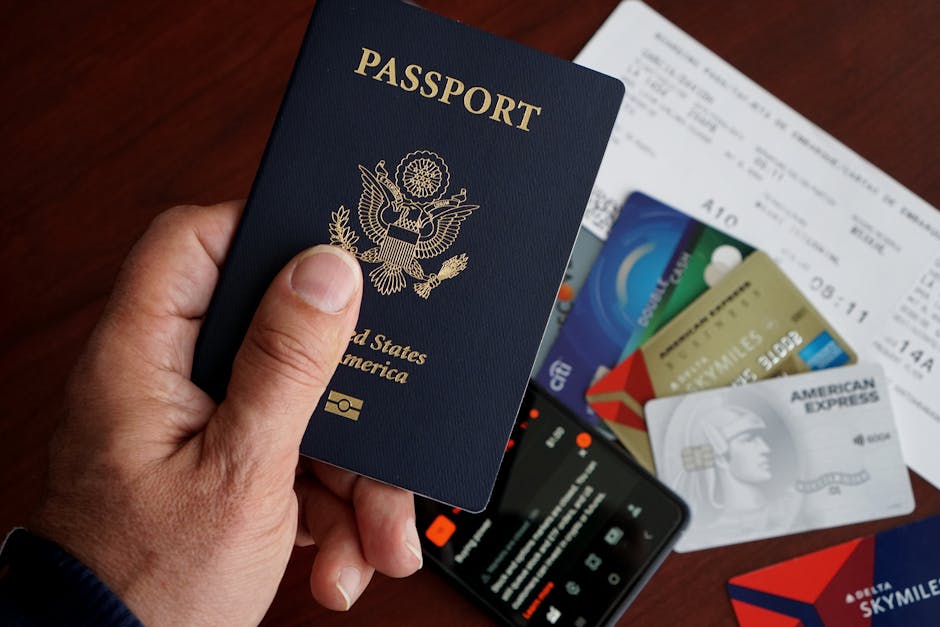
The verification step trips up many. You cannot skip passport upload. You cannot bypass SMS verification with an email backup. The system demands what it demands, and travelers who assumed they could "figure it out on arrival" often find themselves locked out for hours or days while documents process.
Even successful setup doesn't guarantee smooth sailing. The critical distinction—one that separates functioning payments from embarrassing failures—is between business codes and personal codes. Business codes, used by licensed establishments from Haidilao Hot Pot to Starbucks, display logos and accept foreign cards. Personal codes, used by street vendors and small stalls, show names or profile photos and reject international cards automatically.
Learning to spot the difference becomes a survival skill. Business codes have logos, professional branding, sometimes explicit "Foreign Card Accepted" stickers. Personal codes display names like "Li Ming" or family photos. One Australian traveler learned this the hard way when his linked Mastercard failed in a Shanghai taxi—the driver's personal code flashed "Failed," forcing him to borrow cash from a friend. Now he checks codes before getting in.
Emergency Strategies: When Everything Fails
Despite preparation, systems fail. Networks go down. Accounts get frozen. Merchants refuse perfectly functional cards for reasons no one can explain. Smart travelers build redundancy into their payment strategy.
Cash remains the ultimate fallback, but accessing it requires planning. In Guizhou and similar provinces, foreign card ATM withdrawals work only at specific bank brands—the nine listed above. Don't assume any ATM with a Visa logo will dispense cash. The ICBC branch in a county town might handle your card while the rural Agricultural Bank of China next door rejects it, even though both appear on the approved list.
Currency exchange presents its own geography. Authorized agencies exist, but primarily in prefecture-level cities and above. The exchange receipt matters—keep it for reconversion when leaving. In remote areas, exchanging foreign cash becomes impossible; you're dependent on ATM networks that may be fifty kilometers away.
The human network becomes payment infrastructure. Locals can pay anywhere with their fully functional domestic accounts. Asking a fellow traveler, hotel staff member, or sympathetic stranger to pay on your behalf, then reimbursing in cash, solves problems no app can touch. This requires carrying sufficient yuan—another preparation step many overlook.
Some travelers maintain multiple mobile payment setups: Alipay and WeChat Pay, each linked to different cards, each verified and tested with small purchases before critical needs arise. Others keep one card linked to Alipay, another to WeChat, a third reserved for direct terminal use. Redundancy isn't paranoia when a single point of failure leaves you unable to buy train tickets or pay for accommodation.
Reading the Signals: What Works Where
Experienced China travelers develop an intuitive sense of payment probability. Chain restaurants and hotels? Business codes, high success rate. Airport vendors? Explicitly configured for foreigners. High-speed rail ticket counters? Generally functional, though cash windows exist as backup.
The danger zone is authentic local experience—exactly what many travelers seek. The family-run guesthouse in a Dong village. The morning market where farmers sell produce from bamboo baskets. The private car driver arranged through your hotel. These transactions operate in China's domestic payment ecosystem, foreign-card-incompatible by default.
Some travelers embrace this limitation, carrying cash specifically for these moments. Others restrict their movements to payment-friendly corridors, missing experiences that define China's diversity. Neither approach is wrong, but choosing unconsciously—assuming your Shanghai-tested card will work everywhere—leads to the stress scenarios that sour trips.
The regional variation extends beyond Guizhou. Xinjiang, Tibet, and other peripheral provinces present similar or greater challenges. Even within developed regions, county-level cities lag prefecture-level cities by years in foreign payment infrastructure. The 31 provincial-level divisions of China contain hundreds of distinct local banking environments.
The Bigger Picture: A System in Transition
China's payment landscape is evolving rapidly, driven by government pressure to boost tourism and international business. The 2024 Guizhou guidance document itself signals official recognition that the current system excludes valuable visitors. UnionPay's expanding international partnerships, the 180+ overseas mobile platforms now theoretically compatible, suggest movement toward greater openness.
But infrastructure moves slowly. A payment terminal installed in 2019 won't magically accept foreign cards in 2024. Training for rural bank staff lags policy announcements. The gap between Shanghai's seamless experience and Guizhou's workarounds will persist for years, not months.
For travelers, this means maintaining skills that may eventually become obsolete. Learning to spot business versus personal QR codes. Knowing which bank ATMs function in which provinces. Building human networks that can bridge payment gaps. These capabilities matter now, even if China's ultimate destination is genuinely seamless international payment acceptance.
The travelers who thrive are those who treat payment preparation as seriously as visa applications or flight bookings. Who test systems before critical needs arise. Who carry cash as insurance, not as primary strategy. Who understand that China's payment geography is as real as its physical geography—and plan their journeys accordingly.
Your international card isn't broken when it fails in Guizhou. It's simply speaking a language that local infrastructure doesn't understand. The solution isn't better cards or louder complaints. It's learning to navigate a system that wasn't built for you, with the patience and preparation that such navigation requires.
You Might Also Like