The China High-Speed Rail Bicycle Transport Guide: Folding Bikes, E-Bikes, and Touring Cycles in 2026
Navigate China's 45,000km HSR network with your bike: folding bike limits, e-bike battery rules, station quirks at Hangzhou and Chengdu, and multi-modal Yangtze & Yunnan routes.
Navigating China's Rails with Two Wheels
The hum of a high-speed train at 350 km/h and the quiet satisfaction of pedaling through rice terraces might seem like incompatible pleasures. Yet China's sprawling HSR network—now exceeding 45,000 kilometers—has become the invisible backbone of some of Asia's most ambitious cycling adventures. For riders, the challenge isn't whether the train can get you there. It's whether your bike can board with you.
The rules governing bicycle transport on Chinese high-speed rail have tightened considerably since 2020, and 2026 brings another wave of refinements. What worked for a folding bike commuter in 2019 may leave a touring cyclist stranded at Shanghai Hongqiao's security checkpoint today. This guide unpacks the current regulatory landscape, station-specific quirks, and practical strategies for three distinct rider profiles: the urban folder, the e-bike convert, and the loaded tourer chasing Yunnan's mountain passes.
Folding Bikes: The Sweet Spot with Strings Attached
Folding bicycles remain the most HSR-friendly option, but the definition of "folding" has narrowed. China Railway's 2026 guidelines specify that any folded cycle must fit within dimensions of 130 cm × 70 cm × 50 cm (length × width × height) when stowed. This eliminates several popular European folders with 20-inch wheels and extended wheelbases. Bromptons, Dahon models with 16-inch wheels, and Tern's more compact offerings generally clear the bar. Bike Friday's Pocket Rocket, beloved by touring cyclists for its full-size ride feel, often exceeds length limits when packed.
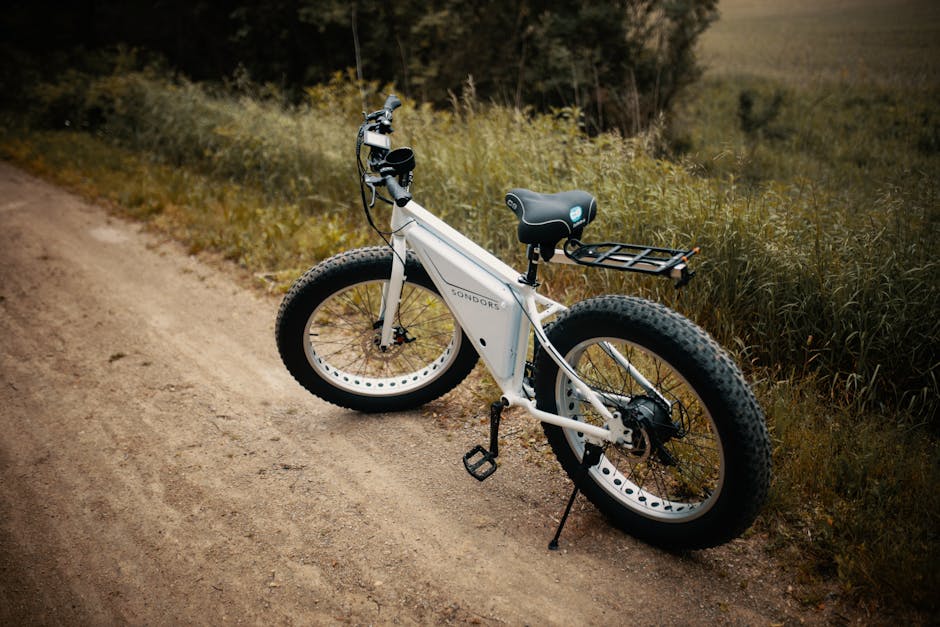
The battery question has grown more complex. Folding e-bikes—sales of which jumped 340% in Chinese cities between 2022 and 2025—face strict lithium-ion restrictions. Removable batteries must be detached and carried in hand luggage, with individual cells capped at 100 watt-hours. Most 36V 10Ah commuter batteries (360Wh) exceed this threshold and are simply banned from HSR carriages. Some manufacturers now produce "travel batteries" segmented into two 180Wh units that can be reunited at destination, though this workaround exists in a regulatory gray zone.
Station enforcement varies dramatically. At Beijing South, security staff wield measuring tapes with bureaucratic precision. At Guangzhou South, folded bikes often sail through during peak hours when staff are overwhelmed. The prudent traveler carries a printed copy of China Railway's official dimensional diagram—available in Mandarin and English at 12306.cn—and arrives 90 minutes before departure to negotiate any disputes.
Station-Specific Realities: Hangzhou and Chengdu
Two cities illustrate how local cycling culture shapes HSR enforcement. Hangzhou, with its 4,000 kilometers of urban greenways and status as China's "bicycle city," maintains surprisingly rigid protocols at its main railway station. The Hangzhou East HSR hub processes enormous tourist volumes—over 300,000 daily passengers—and has streamlined bike checks into a dedicated "oversized luggage" channel. Folding bikes clear in roughly eight minutes during off-peak hours. Full-size bicycles, however, face mandatory freight forwarding to a separate cargo terminal 3 kilometers away, with next-day delivery to most Yangtze Delta destinations. Same-day transport costs ¥280-450 depending on destination, and insurance is mandatory at 2% of declared value.
Chengdu East presents a different picture. As the gateway to Sichuan's mountain cycling routes and increasingly, long-haul tours into Tibet, the station has adapted to adventure cyclists. A dedicated "sports equipment" counter opened in 2024, staffed by personnel trained in bicycle handling. Full-size touring bikes can travel as checked baggage on the same train, not freighted separately, provided they're packed in rigid cases or reinforced cardboard boxes meeting 160 cm × 60 cm × 100 cm maximum dimensions. The service costs ¥150 per bicycle regardless of distance, with same-train arrival guaranteed. This policy reflects Chengdu's municipal investment in "cycling tourism economy"—the city issued 340,000 cycling route maps to arriving passengers in 2025 alone.
Both stations illustrate a broader pattern: enforcement tightens where tourist volume is highest, and relaxes where cycling tourism is economically cultivated. Kunming South, another western hub, recently copied Chengdu's model after Yunnan's cycling tourism revenue hit ¥4.2 billion in 2024.
Full-Size Touring Bicycles: The Packaging Puzzle
For cyclists committed to loaded touring, the HSR presents a formidable logistics challenge. China Railway's official stance permits bicycles only as freight, not passenger baggage, on high-speed services. The workaround—packing bikes as "oversized luggage" within dimensional limits—requires creativity and preparation.
The 160 cm × 60 cm × 100 cm maximum for checked items eliminates most assembled touring bicycles. Disassembly is mandatory: both wheels removed, handlebars turned or detached, pedals removed. Reinforced cardboard boxes, available for ¥80-120 at most large bicycle shops near major stations, suffice for single journeys. For repeated use, EVA hard cases (¥800-1,500) or padded soft cases with internal reinforcement offer better protection. Critical detail: China Railway's 2026 insurance terms exclude damage claims for items packed in "non-rigid containers" on journeys exceeding four hours. Given that Shanghai to Kunming HSR services run 10-12 hours, hard cases are essentially mandatory for southwestern routes.
Insurance itself merits attention. Basic coverage included with tickets covers loss up to ¥2,000 per item—insufficient for most touring bicycles. Supplemental insurance purchased at freight counters raises coverage to ¥15,000 for ¥45-60 per ¥10,000 declared value. Photographing the packed bicycle from multiple angles, including serial numbers and component details, has become standard practice after a 2024 dispute involving a ¥28,000 titanium frame damaged between Xi'an and Lanzhou.
Some cyclists bypass freight entirely by using slower conventional trains ("普速列车") where bicycle policies remain more permissive. The 26-hour overnight service from Shanghai to Kunming accepts assembled bicycles in luggage cars for ¥80-150, depending on weight. The time penalty is substantial, but for riders beginning multi-week tours, the saved disassembly hassle and reduced damage risk often justify the slower journey.
Multi-Modal Itineraries: Yangtze Delta and Yunnan
The most sophisticated China cycling journeys combine HSR segments with on-road riding, exploiting the network's penetration into previously inaccessible terrain. Two regions exemplify this approach.
The Yangtze Delta offers the most developed infrastructure. Shanghai Hongqiao connects to Hangzhou in 45 minutes, Nanjing in 63 minutes, and Suzhou in 23 minutes—each arrival point for distinct cycling ecosystems. A practical five-day itinerary: HSR to Hangzhou, two days riding the 320-kilometer Thousand Island Lake circuit (with electric-assist options now available at 47 rental stations), HSR to Suzhou for canal-side riding, and return via Nanjing's riverside greenways. The entire loop requires two HSR segments with folded bikes, achievable with any sub-130cm folder. For riders starting with full-size touring bikes, Hangzhou's freight-forwarding requirement makes Shanghai Hongqiao or Nanjing South preferable entry points.
Yunnan presents greater complexity and greater reward. The province's HSR network expanded dramatically in 2024-2025, with the Dali-Lijiang-Shangri-La line finally operational after decade-long construction. This 320-kilometer mountain railway, reaching 3,200 meters elevation, permits bicycles only as freight—and the freight schedule doesn't align with passenger services. Cyclists typically HSR to Kunming (from Chengdu: 5.5 hours), spend a day assembling bikes and acclimatizing, then ride north through Dali and Lijiang over 10-14 days. The return journey requires boxing bikes in Lijiang (several shops offer packing services for ¥200-300) and freighting to Kunming for HSR connection, or continuing overland to Chengdu via the G318 highway—a 1,200-kilometer commitment suitable only for experienced tourers.
An emerging alternative: the "bike bus" services launched by Yunnan tourism authorities in 2025. These dedicated coaches, running parallel to HSR corridors, carry assembled bicycles in exterior racks for ¥180-240 per bike plus passenger ticket. They operate on Kunming-Dali and Kunming-Xishuangbanna routes, filling the gap where HSR freight policies remain inflexible. Integration with HSR remains imperfect—passengers must self-transfer between bus terminals and railway stations—but the services have transported 140,000 bicycles in their first 18 months of operation.
The Road Ahead
China's HSR bicycle policies remain in flux, shaped by competing pressures: passenger safety concerns, cargo revenue protection, and the economic potential of cycling tourism. The 2026 regulations suggest gradual liberalization for folding bikes and freight integration for full-size cycles, but implementation will stay uneven across stations and regions.
For cyclists, success requires preparation that borders on obsessive: printed dimensional diagrams, hard cases for valuable frames, insurance documentation, and contingency time built into itineraries. The reward is access to terrain that would require weeks of pedaling to reach—Tibetan foothills, karst landscapes, bamboo forests—followed by the singular pleasure of descending under your own power, the HSR's electric hum fading into mountain silence.
You Might Also Like