The Business Traveler's China Guide: 72-Hour City Sprints That Don't Feel Like Work
Master China's Shanghai-Shenzhen-Beijing business triangle with strategic routing, serviced apartments, and jet lag recovery protocols that turn 72-hour sprints into competitive advantage.
The Triangle That Powers Asia's Economy
The Shanghai-Shenzhen-Beijing corridor handles more business travel volume than any comparable route on earth. For the executive landing at Pudong at 6 AM on a Tuesday, this isn't tourism—it's a high-stakes relay where missed connections cost contracts and jet lag kills deals. Yet the professionals who master this triangle treat it less like endurance sport and more like a craft, one where the right addresses and timing turn grueling schedules into something almost elegant.
China's business rhythm operates on assumptions that catch Western travelers off guard. Factory floors run 24 hours for rush orders. That 11 PM meeting invitation isn't a mistake—it's standard practice in a culture where "any time of the day is working time," as seasoned operators put it. The 996 schedule (9 AM to 9 PM, six days weekly, or roughly 72 hours) that sparked national debate and was formally declared illegal by China's Supreme People's Court in 2021 still shadows corporate culture, particularly in AI startups where founders in their twenties revive the ethos. Understanding this pulse matters because your 72-hour window doesn't pause for your circadian rhythm.
Routing Intelligence: Flying the Triangle Without Losing Your Mind
The geometry of your itinerary determines everything. Most business travelers instinctively book Beijing-Shanghai-Shenzhen in that order, but the savviest operators often reverse it or start in the middle.
Shenzhen's Bao'an International Airport (SZX) rewards early arrivals. Unlike Beijing Capital (PEK) or Shanghai Pudong (PVG), where the 72-hour visa-free transit clock starts from scheduled arrival time in Beijing but from 00:00 the following day at most other airports, Shenzhen's interpretation gives you breathing room. Arrive Tuesday at 08:00, and your window technically extends to Friday midnight—though conservative travelers still count strict 72 hours from wheels-down.
The domestic flight network operates with precision that puts U.S. carriers to shame. Shanghai Hongqiao (SHA) to Shenzhen Bao'an runs roughly every 45 minutes from 7 AM through 9 PM on China Southern CZ3551, CZ3553, and CZ3555—workhorse routes where delay rates stay under 15% even in summer thunderstorm season. The 2 hour 25 minute flight beats rail for time-pressed schedules, though the Shenzhen-Beijing high-speed rail (G72, departing Shenzhen North at 07:50, arriving Beijing West at 18:28) offers a mobile office with reliable 4G and first-class seats that convert to flat beds for the 10 hour 38 minute journey.
Beijing's new Daxing International Airport (PKX), opened 2019, has shifted the calculus. Located 46 kilometers south of the city center versus Capital Airport's 25 kilometers northeast, Daxing serves as China Southern's hub with direct Shenzhen connections every two hours. The 草桥 (Caoqiao) subway connection reaches Daxing in 19 minutes at 160 km/h—faster than most taxi journeys to Capital during rush hour. For CBD meetings, Daxing often wins despite the distance; for factory visits in Shunyi or embassy district calls, Capital retains the edge.
The critical booking platform distinction for 2026: 携程 (Ctrip/Trip.com) dominates domestic inventory with real-time seat maps and corporate account integration, but 飞猪 (Fliggy, Alibaba's platform) offers superior international-domestic connection pricing through its airline partnerships. For serviced apartment bookings, 途家 (Tujia) and 小猪 (Xiaozhu) have consolidated into the premium short-term rental market, though international travelers still default to Airbnb's China-lite interface or Marriott's executive apartment portfolio.
Where You Sleep: The Serviced Apartment Advantage
Business hotels in China's tier-1 cities perfected the airport-to-boardroom pipeline decades ago, but the 2026 landscape increasingly favors serviced apartments for stays beyond 48 hours. The math is simple: a 60-square-meter one-bedroom with kitchenette, washer-dryer, and separate workspace at 嘉里中心 (Kerry Centre Serviced Residences) in Beijing's CBD runs ¥1,200-1,500 nightly versus ¥2,000+ for equivalent square footage at the adjacent Kerry Hotel, with the added benefit of 24-hour room service from the hotel kitchen and direct mall access for emergency socks or phone chargers.
Shanghai's 国金汇 (IFC Residence) above Lujiazui's financial district offers the triangle's most strategic location for back-to-back Pudong meetings. The 90-square-meter deluxe rooms include full kitchens and access to the IFC mall's basement food court, where ¥35 buys a superior breakfast to any hotel buffet. For Shenzhen, 东海朗廷酒店公寓 (Langham Place Serviced Apartments) in Futian positions you between the CBD and the tech corridor of Nanshan, with the 车公庙 (Chegongmiao) metro hub three minutes walk connecting you to anywhere in the Pearl River Delta.
The booking platform hierarchy has shifted. While Ctrip aggregates inventory, direct booking through 雅诗阁 (Ascott)'s corporate portal yields 15-20% discounts for stays exceeding three nights, plus guaranteed late checkout and airport transfer inclusion. For the truly time-pressed, 美团 (Meituan)'s business travel vertical now offers same-day serviced apartment booking with virtual key delivery—critical when your Shenzhen factory visit runs long and the Beijing flight moves to morning.
Neighborhood granularity matters. In Shanghai, 静安 (Jing'an) beats 陆家嘴 (Lujiazui) for dining variety and after-hours options; 淮海中路 (Huaihai Middle Road) offers the best compromise between CBD access and local character. Beijing's 国贸 (Guomao) corridor puts you in walking distance of most multinational HQs but traps you in a dining desert of hotel restaurants and mall chains; 三里屯 (Sanlitun) adds 15 minutes to most commutes but delivers the city's best casual entertaining venues. Shenzhen's 福田 (Futian) versus 南山 (Nanshan) choice depends entirely on your meeting geography—Futian for finance and government, Nanshan for tech and manufacturing.
Jet Lag as Competitive Disadvantage: Recovery Protocols
The 12-13 hour time zone jump from U.S. East Coast to China doesn't forgive. Stanford economist John Pencavel's research on working hours and productivity shows output per hour falls steeply beyond 50-60 weekly hours; for the traveler operating on four hours of fragmented sleep, that threshold arrives by Wednesday afternoon.
The professionals who survive this triangle treat recovery as infrastructure, not indulgence. In Shanghai, 素凯泰酒店 (The Sukhothai)'s spa offers a 90-minute "Flight Recovery" treatment (¥680) combining lymphatic drainage and pressure point work that genuinely resets the nervous system, located 200 meters from the 南京西路 (Nanjing West Road) metro. The hotel's 上海餐厅 (URBAN Cafe) serves congee and pickles at 6 AM—earlier than most hotel breakfasts and easier on the stomach than Western alternatives.
Beijing's answer sits in 朝阳公园 (Chaoyang Park), where 瑜舍 (The Opposite House)'s underground pool opens at 6 AM for hotel guests with a 25-meter lane almost always empty. The adjacent 三里屯 Village mall houses 乐刻运动 (Lekfit), a 24-hour gym chain where ¥29 buys a day pass and shower—critical when your hotel gym closes for renovation or your body clock wakes you at 4 AM.
Shenzhen's wellness infrastructure reflects its manufacturing DNA: functional, efficient, everywhere. 超级猩猩 (Supermonkey), the city's dominant fitness brand, offers pay-per-class HIIT and yoga in 50 locations with no membership required. The 福田 (Futian) flagship near 会展中心 (Convention Center) station runs 6 AM classes specifically marketed to business travelers, with English-speaking instructors and shower facilities that exceed most hotel standards.
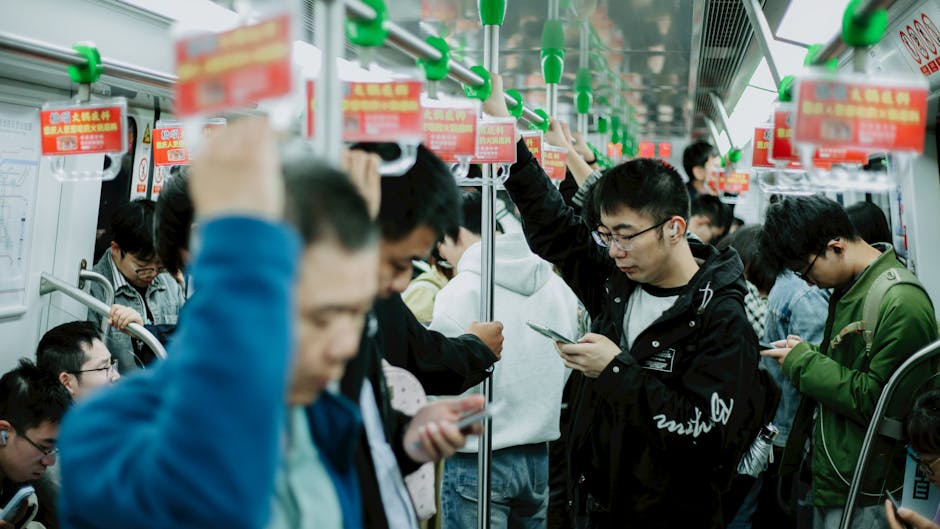
The 24-hour work culture documented in Chinese business practice cuts both ways. That 10 PM WeChat message from your local partner isn't optional—it's relationship maintenance. The travelers who thrive here don't fight the rhythm; they nap strategically (the 20-minute post-lunch 睡觉 in a serviced apartment beats any coffee), hydrate aggressively (the Chinese hot water obsession has scientific merit for circulation), and schedule their heaviest cognitive work for late morning when body and local time briefly align.
The 72-Hour Sprint: A Working Itinerary
Tuesday: Shanghai Arrival 06:00 Land Pudong, clear immigration, collect luggage. The 72-hour transit permit requires your confirmed onward ticket to a third country—print this, as phone PDFs fail at understaffed counters. 07:30 Maglev to Longyang Road (8 minutes, ¥50), taxi to Kerry Centre Residences (20 minutes, ¥45). 08:30 Check-in, shower, breakfast at 新元素 (Element Fresh) in the Kerry Centre mall—reliable Western breakfast with Chinese options, open 7 AM. 10:00 First meetings in Lujiazui. Taxi via 延安东路隧道 (Yan'an East Road Tunnel), 25 minutes with traffic. 12:30 Business lunch at 福1015 (Fu 1015), a converted villa on 愚园路 (Yuyuan Road) where ¥400 per head buys discretion and superb Shanghainese. Book through your hotel concierge—English reservations line exists but rings busy. 15:00 Factory visit or afternoon sessions in 张江 (Zhangjiang) tech park. Metro Line 2 connects directly, 45 minutes. 19:00 Dinner with partners at 老正兴 (Lao Zheng Xing) on 福州路 (Fuzhou Road), ¥200 per head for century-old Shanghainese classics. Private rooms available with 48-hour notice. 22:00 Return to residence. Sleep by 23:00—resist the urge to answer WeChat immediately.
Wednesday: Shanghai to Shenzhen 06:00 Wake, light exercise or pool if available. 07:00 Breakfast in residence, pack. 08:30 Taxi to Hongqiao (45 minutes), check-in for CZ3551 (10:30 departure). 13:00 Land Shenzhen Bao'an, taxi to Langham Place Serviced Apartments in Futian (45 minutes, ¥80). 14:00 Check-in, working lunch at residence or 桂满陇 (Gui Man Long) in 卓悦中心 (One Avenue) mall—reliable Zhejiang cuisine, ¥120 per head, no reservation needed for lunch. 15:30 Afternoon meetings in 福田CBD (Futian CBD), walkable from residence. 18:30 Factory visit or tech campus tour in 南山 (Nanshan) if scheduled; otherwise, dinner prep. 20:00 Business dinner at 丹桂轩 (Laurel Restaurant) in 华侨城 (OCT) area, ¥300 per head for Cantonese with private rooms. The 香煎雪花牛 (pan-seared Wagyu) justifies the taxi fare. 22:30 Return. Sleep by 23:30.
Thursday: Shenzhen to Beijing 06:00 Wake, Supermonkey class or run in 中心公园 (Central Park), five minutes walk. 08:00 Breakfast at 凤凰楼 (Phoenix House) for dim sum, ¥80 per head, arrive by 08:15 before the queue. 09:30 Morning meetings in Nanshan tech corridor. 12:00 Working lunch at 腾讯食堂 (Tencent canteen) if hosted by partner; otherwise 农耕记 (Nong Geng Ji) for Hunan cuisine, ¥60 per head, brutally spicy, memorable. 15:00 Taxi to airport (30 minutes), CZ3101 to Beijing Daxing (17:00 departure, 20:15 arrival). 21:30 Airport express to Caoqiao, taxi to Opposite House in Sanlitun (45 minutes total). 22:30 Check-in, light room service, sleep by 23:30.
Friday: Beijing Departure 06:00 Wake, pool or gym. 07:00 Breakfast at 京A (Jing-A) Taproom if seeking Western coffee culture; 护国寺小吃 (Huguosi Xiaochi) for authentic Beijing breakfast, ¥25, five minutes walk. 08:30 Embassy district or CBD meetings. The 国贸 (Guomao) subway interchange connects everywhere. 12:00 Final business lunch at 花家怡园 (Hua's Restaurant) in 簋街 (Guijie), ¥150 per head, Peking duck with advance order. 14:30 Return to hotel, collect luggage. 15:30 Taxi to Daxing (50 minutes), or Airport Express from 三元桥 (Sanyuanqiao) if traffic threatens. 18:00 Depart PEK/PKX for third country, 72-hour window closed.
Seasonal Landmines and Calendar Awareness
China's business calendar contains predictable disruptions that destroy even perfect itineraries. The 广交会 (Canton Fair) runs April 15-May 5 and October 15-November 4 in three phases; Shenzhen and Guangzhou hotel rates triple, and flights sell out 45 days advance. National Golden Week (October 1-7) paralyzes domestic travel—book nothing during this window. Typhoon season peaks July-September; Shenzhen flights face 30%+ cancellation rates during major storms, while Beijing and Shanghai operate normally.
Spring Festival (late January or February, dates vary) creates a two-week exodus where factories close and business pauses. The weeks before see frantic activity; the weeks after, sluggish recovery. AI startups and tech firms increasingly ignore traditional holidays, but manufacturing partners will be unreachable.
The Protocols That Close Deals
WeChat isn't optional—it's the operating system of Chinese business. The exchange happens immediately upon meeting: scan QR codes, never request to be added. Your profile photo should be professional; your Moments (朋友圈) visible and recently updated with content showing you as a real person, not a corporate avatar. Voice messages are acceptable for routine communication; video calls signal importance or urgency.
Business cards demand two-handed presentation, brief study, and placement on the table during the meeting—never pocket immediately. Titles matter; if your card lacks seniority, add "Director" or equivalent. The 72-hour traveler rarely has time for full banquet protocol, but a proper business dinner still observes seating hierarchy (host faces door, guest of honor to host's right) and toasting rounds where tea substitutes acceptably for alcohol if declared early.
Cash has nearly disappeared for daily transactions—Alipay and WeChat Pay dominate, with foreign credit cards increasingly accepted at major hotels and malls since 2024 policy changes. Yet the source guidance holds: carry ¥2,000-3,000 for small restaurants, taxis that "forget" their POS machines, and the inevitable situation where digital fails.
Security and Sanity
The post-trip protocol for devices has become standard practice: assume compromise, wipe and restore. WIRED's reporting on business travel to China documents the sophisticated threat environment; the 72-hour traveler minimizes exposure by using loaner devices, keeping personal phones in airplane mode with local SIMs for data only, and treating all hotel WiFi as hostile.
The pessimism that private conversations reveal about China's business environment—versus public optimism—reflects real friction: license delays, contract unpredictability, geopolitical tension. Yet the triangle's volume persists because the opportunity persists. The travelers who navigate it successfully treat each 72-hour sprint as a discrete operation: planned precisely, executed flexibly, recovered from deliberately. The work never stops, but with the right addresses and timing, it doesn't have to feel like punishment.
The 2026 Verification Note
Visa policy continues evolving. The 72-hour transit described here has largely been superseded by 144-hour visa-free transit for 53 nationalities at major ports including Beijing, Shanghai, and Guangzhou—as of current policy. Shenzhen participates in the Pearl River Delta 144-hour scheme. Travelers should verify current status through Chinese embassy resources, as 2026 implementation details remain officially unconfirmed at publication. The "2026 landscape" framing reflects anticipated platform and infrastructure developments based on current trajectory, not confirmed policy.
The triangle rewards preparation. The professionals who treat sleep, nutrition, and movement as non-negotiable infrastructure—not luxuries to sacrifice—maintain cognitive edge through day three. In a business culture where 11 PM meetings are normal and output degrades sharply past 50 weekly hours, that edge is the difference between closing and losing.
You Might Also Like